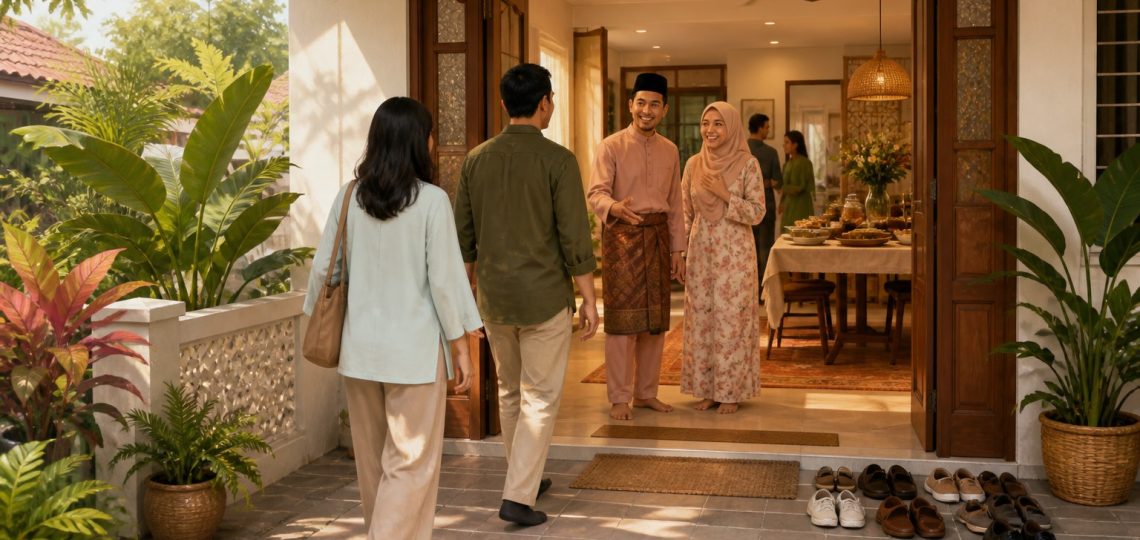
Invited to a Malaysian Open House? A Guest Guide Without Guesswork
A Malaysian festive “open house” is an invitation to hospitality, not permission to enter any house with an open door.
Hosts may welcome relatives, friends, colleagues and neighbours during Hari Raya, Deepavali, Chinese New Year or another celebration. The scale can range from a private home meal to an organisation’s large event. Your invitation—who sent it, where it is and what time window it gives—matters more than a universal etiquette script.
The invitation decoder
| Detail | What to confirm | Why it prevents awkwardness |
|---|---|---|
| Guest scope | Is the invitation for you, your partner or your family? | “Open house” does not automatically mean unlimited extra guests |
| Time | Is it a fixed meal time or a drop-in window? | Hosts may expect guests in waves |
| Place | Home, hall, office or public event? | Arrival, shoes, registration and seating differ |
| Food needs | Should dietary requirements be raised in advance? | A festive spread does not guarantee every dish suits every guest |
| Dress | Is there a stated dress code or religious venue involved? | The setting may require more specific clothing than the festival name suggests |
If the message is informal, a short reply can confirm all five without turning hospitality into an interview.
Arrival: follow the host’s choreography
At a home, pause at the entrance and watch for footwear cues. Greet the host before heading toward food. At a larger event, follow registration, queue and seating signs rather than assuming the home-based pattern applies.
Education Malaysia Global Services describes Hari Raya open-house visiting as a way people share food and celebration across communities. That is useful context, but it does not tell you the exact rules for your host. A private invitation remains a relationship, not a tourism attraction.
Gifts: thoughtful is better than automatic
Community questions about Raya and Deepavali open houses repeatedly ask what to bring. Replies vary—from arriving with good wishes to bringing food or a host gift—which is exactly why a universal shopping list would be misleading.
If you want to bring something, ask whether it would be useful. Consider the host’s dietary and religious requirements, and keep the gift modest enough that it does not demand ceremony. Do not bring alcohol or an unverified food product into a setting where it may be unsuitable.
Food: take a tour before filling the plate
Large spreads may mix savoury dishes, sweets and drinks in separate areas. Look over the layout, take a moderate first serving and return if invited. Use serving utensils, keep queues moving and ask before photographing people or private interiors.
Do not infer ingredients from a dish name or appearance. Ask the host or caterer, especially for allergies or firm dietary requirements. Hospitality should not be turned into pressure to eat something unsafe or inappropriate for you.
Leaving well is part of attending
Thank the host directly when possible. If many guests are arriving, avoid extending the visit simply because no formal ending was announced. A brief message afterward is appropriate when the event was personal.
Use the shoe-removal entrance cues before entering a home or worship space, and see why spoon and fork are common for a frequent table setup.
Sources and limits
The Hari Raya context comes from Education Malaysia Global Services’ open-house traditions overview. Recurring guest questions appear in community discussions about Raya open-house dos and don’ts, advice for Raya guests and what to bring to a Deepavali open house. Those posts show individual concerns and answers, not rules shared by every host.