Ultimate Global Cultural Travel Guide: Art, Hospitality, and Heritage
The Essence of Global Cultural Travel: Bridging Diverse Traditions
True travel extends far beyond merely checking off a list of famous landmarks; it is an immersive plunge into the living, breathing cultural fabric of a destination. To understand a city or a nation, one must observe its micro-cultures, its daily rituals, and its historical echoes. This comprehensive guide dissects four radically different yet equally profound cultural experiences across the globe. By analyzing the rebellious street art of London, the hyper-efficient hospitality of Tokyo, the philosophical café culture of France, and the divine architectural geometry of Isfahan, we uncover the multifaceted nature of human expression.
Each of these destinations offers a unique lens through which we can examine societal values. Whether it is the preservation of ancient religious devotion or the adaptation to modern urban density, these cultural touchstones provide invaluable insights. As we journey through these distinct landscapes, we will explore not only the history and mechanics of these locations but also the unspoken rules and etiquettes that govern them, empowering you to travel not just as a tourist, but as an informed cultural participant.

London’s Graffiti Tunnels: The Pulse of Underground Street Art
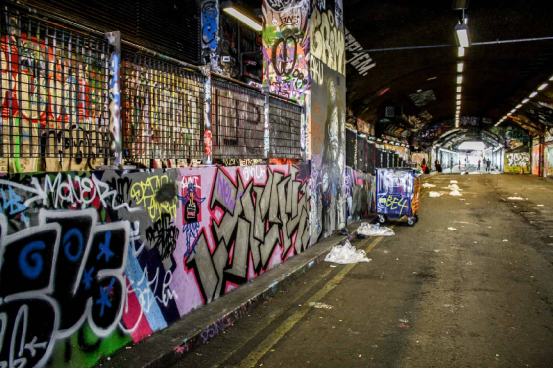
Beneath the orderly, historic streets of London lies a vibrant, chaotic, and deeply expressive subterranean world. The city’s graffiti tunnels, most notably the Leake Street Arches beneath Waterloo Station, serve as a dynamic canvas for urban expression. Unlike traditional art galleries, these tunnels are democratized spaces where art is transient, rebellious, and constantly evolving. The juxtaposition of London’s polished royal heritage with this raw, aerosol-driven subculture creates a fascinating cultural dichotomy.
The Historical Context of Leake Street
The transformation of Leake Street into a global epicenter for street art began in 2008, spearheaded by the elusive artist Banksy, who organized the “Cans Festival.” This event invited pioneering street artists from around the world to transform the gloomy, abandoned tunnel into a spectacular exhibition of urban art. Today, it remains a legal graffiti wall, a rare sanctuary where artists can work without fear of prosecution, fostering a unique ecosystem of creative freedom.
Understanding the ecosystem of these tunnels requires an appreciation for the unspoken laws of the street art community. The walls are never static; a masterpiece painted on a Tuesday might be entirely covered by a new mural by Thursday. This ephemeral nature is central to the culture.
- The Hierarchy of the Wall: In the graffiti world, you never paint over another artist’s work unless you are confident that your piece will be significantly better or more complex.
- Tags vs. Murals: While intricate murals command the most respect and longevity on the walls, simple “tags” (an artist’s signature) are often viewed as the foundational, albeit controversial, roots of the culture.
- Community Collaboration: The tunnels act as a social hub where artists share techniques, collaborate on massive multi-wall pieces, and mentor younger generations of street artists.

Tokyo Capsule Hotels: A Masterclass in Space and Japanese Efficiency
Transitioning from the sprawling, chaotic tunnels of London to the hyper-organized metropolis of Tokyo, we encounter a completely different cultural phenomenon: the capsule hotel. Born out of necessity during Japan’s rapid economic boom in the late 1970s, capsule hotels were originally designed for salarymen who had missed the last train home. Today, they have evolved into a fascinating intersection of minimalist design, technological efficiency, and unique Japanese hospitality (Omotenashi).
The Architecture of Micro-Living
The concept was pioneered by architect Kisho Kurokawa, who designed the Nakagin Capsule Tower in 1972, laying the philosophical groundwork for modular living. A standard capsule measures roughly 2 meters long, 1 meter wide, and 1 meter high—just enough room to sit up and sleep. Yet, within this confined space, one finds a marvel of ergonomic engineering.
Staying in a capsule hotel is highly ritualized. For first-time visitors, the process can seem intimidating, but it follows a strict, logical flow designed to maintain cleanliness, quiet, and order among hundreds of guests sharing a relatively small footprint.
- The Shoe Locker Protocol: Upon entering, guests must immediately remove their street shoes, place them in a dedicated locker, and wear provided indoor slippers. This separates the “dirty” outside world from the “clean” interior sanctuary.
- Gender Segregation: Traditionally, capsule hotels were exclusively for men. Modern iterations welcome all genders, but floors and elevator access are strictly segregated by sex to ensure privacy and comfort.
- The Communal Bath (Sento): A highlight of the experience is the communal bathing area. Guests must thoroughly wash and rinse themselves at seated shower stations before soaking in the large, shared hot tubs, adhering to centuries-old Japanese bathing etiquette.
- The Pod Experience: Inside the fiberglass pod, guests are provided with a high-quality futon, ambient lighting controls, ventilation, a small television, and a pull-down privacy blind. Silence in the sleeping quarters is strictly enforced.

French Coffee Culture: The Art of the Parisian Café
If Tokyo’s capsule hotels are about maximizing efficiency, the French café culture is about deliberately slowing down time. In Paris and throughout France, the café is not merely a place to acquire a quick dose of caffeine; it is a vital social institution, a philosophical battleground, and the quintessential stage for the art of people-watching. The French approach to coffee is deeply intertwined with their broader cultural appreciation for leisure, conversation, and gastronomy.
Decoding the Parisian Terrasse
The physical layout of a French café is telling. Unlike American or British coffee shops where seating is often arranged for private work or inward-facing conversations, the iconic Parisian terrasse features rows of small, round tables with wicker chairs facing outward toward the street. This architectural choice transforms the street into a theater, with the patrons acting as the audience.
To truly immerse oneself in this culture, one must understand the unwritten rules of ordering and consuming coffee in France. The terminology and expectations differ vastly from the globalized, syrup-heavy coffee chains.
- Un Café: If you simply order “un café,” you will receive a small, strong shot of espresso. This is the default French coffee, meant to be sipped slowly, often accompanied by a single square of dark chocolate or a small biscuit.
- Café Crème vs. Café au Lait: A café crème is espresso topped with steamed milk, typically ordered at a café. A café au lait is similar but is traditionally consumed at home in a bowl during breakfast, often used for dunking croissants.
- The Rule of Time: When you order a coffee in France, you are essentially renting the table. Waiters will rarely bring the bill until you explicitly ask for it (“L’addition, s’il vous plaît”). You are encouraged to sit for hours, read a book, or debate with friends without any pressure to vacate the seat.

The Isfahan Mosque: Exploring Persian Religious Architecture
Moving from the secular social spaces of Europe to the profound spiritual centers of the Middle East, the city of Isfahan in Iran stands as a pinnacle of Islamic architectural achievement. The mosques of Isfahan, particularly the Shah Mosque (also known as the Imam Mosque) and the Jameh Mosque, are not just places of worship; they are monumental representations of the divine universe, mathematically calculated and artistically rendered in breathtaking detail.
The Geometry of the Divine
Persian Islamic architecture utilizes geometry, calligraphy, and light to create an atmosphere of transcendence. Because Islamic tradition generally prohibits the depiction of sentient beings in religious art, artisans channeled their devotion into incredibly complex geometric patterns and floral motifs (arabesques). The mosques of Isfahan are world-renowned for their extensive use of haft-rangi (seven-color) mosaic tiles, which drape the massive domes and minarets in vibrant hues of azure, turquoise, and gold.
Visiting these architectural marvels requires a deep appreciation for the symbolic meaning embedded in every archway and courtyard. The design is intended to guide the visitor from the chaotic secular world into a state of spiritual tranquility.
- The Iwan Structure: Isfahan’s mosques are famous for their four-iwan layout. An iwan is a vaulted space that opens on one side to a courtyard. The towering entrance iwans, adorned with stalactite-like muqarnas vaulting, serve as transitional portals bridging the earthly and the celestial.
- Acoustic Brilliance: The central domes are engineered with astonishing acoustic properties. In the Shah Mosque, a person standing precisely in the center under the apex of the dome can whisper, and the sound will echo up to seven times, allowing the Imam’s voice to reach all corners of the vast space without modern amplification.
- Cultural Etiquette: Exploring these sacred spaces demands strict adherence to local customs. Modest dress is mandatory, with women required to wear a chador or hijab, and men required to wear long trousers. Shoes must be removed before entering the carpeted prayer halls, symbolizing the shedding of worldly impurities.

Best Practices for Authentic Cultural Immersion
Experiencing global cultural travel—whether navigating the unwritten rules of a London graffiti tunnel, checking into a Tokyo capsule, lingering at a Parisian café, or marveling at an Isfahan mosque—requires a specific mindset. The modern traveler must transition from being a passive observer to an active, respectful participant. Cultural immersion is an active pursuit that demands empathy, research, and a willingness to step outside of one’s comfort zone.
Strategies for Mindful Travel
To truly extract value from these diverse experiences, travelers should adopt a framework of mindful exploration. This involves minimizing one’s disruptive footprint while maximizing genuine interaction with local traditions and people.
- Pre-Trip Education: Always research the historical and social context of a destination. Knowing that capsule hotels originated from Japan’s post-war economic boom, or that Isfahan’s blue tiles represent the vault of heaven, fundamentally changes how you perceive the space.
- Embrace the Language Barrier: Learn at least the foundational phrases of the local language. A simple “Bonjour” upon entering a French café or “Arigato gozaimasu” in a Tokyo hotel demonstrates respect and immediately warms the interaction with locals.
- Adapt to Local Pacing: Cultural difference is often most acutely felt in the perception of time. Do not rush a French waiter, do not loiter in the fast-paced corridors of a Tokyo station, and allow yourself the time to sit quietly and absorb the atmosphere of a Persian courtyard.
Frequently Asked Questions (FAQ)
- Is it safe to visit London’s graffiti tunnels at night?
- Yes, the Leake Street Arches are generally safe and well-lit, functioning as a popular pedestrian thoroughfare and artistic hub. However, as with any urban environment, it is advisable to stay aware of your surroundings. The atmosphere is usually vibrant and communal, often filled with artists working and photographers capturing the ever-changing walls.
- Are Tokyo capsule hotels suitable for claustrophobic individuals?
- It depends on the severity of the claustrophobia. Modern capsules are surprisingly spacious, roughly the size of a twin bed, and feature good ventilation, lighting controls, and an open end (covered only by a pull-down blind, not a locking door). Many travelers find them cozy rather than confining, but those with severe claustrophobia might prefer a standard business hotel.
- Why do French waiters sometimes seem unfriendly to tourists?
- This is often a cultural misunderstanding. In France, waiting tables is a respected profession, and the relationship between waiter and customer is one of equals, rather than the “customer is always right” dynamic prevalent in North America. Furthermore, French culture values privacy and non-intrusion; a waiter leaving you alone for an hour is considered polite, allowing you to enjoy your space without being rushed to pay and leave.
- Can non-Muslims visit the mosques in Isfahan?
- Absolutely. The major historical mosques in Isfahan, such as the Shah Mosque and Jameh Mosque, are open to non-Muslim tourists outside of official prayer times. Visitors are warmly welcomed to admire the architecture, provided they adhere to the dress code and conduct themselves respectfully within the sacred precincts.