The Ultimate Guide to Iconic Global Landmarks & World Heritage Sites
The Allure of Global Landmarks: Journey Through History and Culture
Global landmarks stand as monumental testaments to human ingenuity, artistic expression, and profound historical narratives. They are not merely structures but living museums, each brick and stone imbued with stories of civilizations, empires, and spiritual devotion. From the sun-drenched ruins of ancient Egypt to the fairytale castles nestled in Bavarian Alps, these sites offer unparalleled insights into the diverse tapestry of human heritage. This pillar page serves as an exhaustive guide, meticulously detailing the unique characteristics, historical significance, and cultural impact of some of the world’s most revered destinations, encouraging a deeper appreciation for their enduring legacy.
Luxor Temple: An Epic Written in Stone
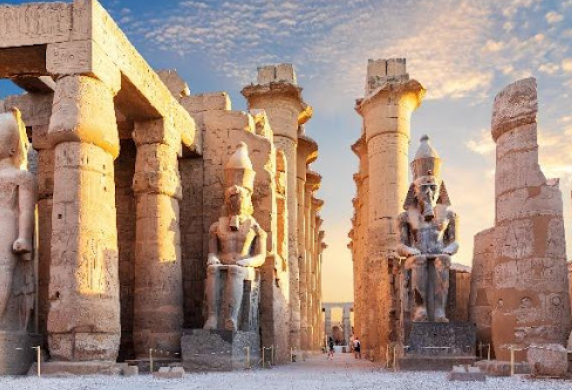
Nestled on the east bank of the Nile River in the ancient city of Thebes, Luxor Temple stands as a magnificent tribute to the gods Amun, Mut, and Khonsu. Unlike many other temples in Luxor, it was not dedicated to a cult god or a deified king but to the rejuvenation of kingship, often serving as a setting for coronation rituals. Its construction began around 1400 BCE under Amenhotep III and was later expanded by Tutankhamun, Horemheb, and most notably, Ramesses II, whose grand additions include the colossal statues and obelisks at the entrance.
Ancient Egyptian Grandeur and Architectural Innovation
The temple’s design is a sprawling complex of courtyards, halls, and sanctuaries, reflecting the sophisticated architectural prowess of ancient Egypt. The main entrance, flanked by a massive pylon, originally featured two granite obelisks, one of which now stands in the Place de la Concorde in Paris. Beyond the pylon, visitors enter the Great Court of Ramesses II, surrounded by papyrus-bud columns and adorned with statues of the pharaoh. Further inside, the colonnade of Amenhotep III leads to his sun court, a breathtaking space with 14 papyrus-bundle columns, each towering over 50 feet high.
- Colossal Statues: The entrance to Luxor Temple is guarded by imposing statues of Ramesses II, depicting him in various forms, including seated and standing, emphasizing his divine authority and power.
- Hieroglyphic Narratives: Every wall, column, and archway within the temple is adorned with intricate hieroglyphs and reliefs, chronicling the lives of pharaohs, their military victories, religious ceremonies, and the mythical journeys of gods. These detailed carvings serve as invaluable historical records.
- Avenue of Sphinxes: A grand processional avenue, once lined with hundreds of sphinxes, connected Luxor Temple with the Karnak Temple complex, creating a monumental pathway for religious processions and ceremonies. Restoration efforts are gradually uncovering more of this ancient route.
Religious Significance and Cultural Legacy
Luxor Temple played a pivotal role in the annual Opet Festival, a vibrant celebration where the cult statues of Amun, Mut, and Khonsu were paraded from Karnak to Luxor Temple. This festival symbolized the fertility of the Nile and the rejuvenation of the king’s divine power. Over millennia, the temple has witnessed various transformations; a Roman legionary camp was established within its walls, and later, a mosque dedicated to Abu el-Haggag was built atop one of its courtyards, demonstrating layers of continuous human history and reverence.
Exploring Luxor Temple offers a tangible connection to an ancient world, inviting contemplation on the enduring power of faith, artistry, and the relentless march of time. The interplay of light and shadow across its ancient stones, particularly at dawn or dusk, reveals the temple’s profound beauty and spiritual resonance, making it an unforgettable experience for any traveler.

Gyeongbokgung Palace: Echoes of the Joseon Dynasty
Located in the heart of Seoul, South Korea, Gyeongbokgung Palace is the largest and arguably the most beautiful of the Five Grand Palaces built during the Joseon Dynasty. Constructed in 1395, just three years after the founding of the dynasty, it served as the primary royal palace until it was extensively damaged during the Japanese invasions of the late 16th century. Its name, “Gyeongbokgung,” translates to “Palace Greatly Blessed by Heaven,” reflecting its auspicious beginnings and central role in Korean governance and culture.
Heart of Korean Heritage and Royal Grandeur
Gyeongbokgung Palace was meticulously designed to embody the principles of traditional Korean architecture and feng shui, with its main buildings aligned along a central axis and surrounded by stunning gardens. The palace grounds encompass several key structures, each serving a distinct purpose within the royal court. The impressive Gwanghwamun Gate, the main entrance, leads to Heungnyemun Gate, and then to Geunjeongjeon Hall, the throne hall where the king conducted state affairs, received foreign envoys, and held grand ceremonies.
- Geunjeongjeon Hall: This magnificent hall, designated as National Treasure No. 223, features intricate decorations and a grand courtyard where official functions were held. Its elevated stone platforms (hwagyebong) marked the ranks of court officials during assemblies.
- Gyeonghoeru Pavilion: A picturesque pavilion set in the middle of a lotus pond, Gyeonghoeru was used for important state banquets and royal celebrations. Its elegant design against the backdrop of mountains is one of the most iconic images of the palace.
- Hyangwonjeong Pavilion: A smaller, more intimate hexagonal pavilion also situated on an island in a pond, Hyangwonjeong offered the royal family a tranquil retreat for relaxation and contemplation.
Royal History and Cultural Immersion
The palace complex also includes the living quarters of the king and queen, such as Gangnyeongjeon Hall and Gyotaejeon Hall, as well as the Jagyeongjeon Hall, known for its beautiful ten longevity symbols wall. Throughout its history, Gyeongbokgung has endured periods of destruction and extensive restoration, particularly in the late 19th and early 20th centuries, and again in the late 20th century to restore its original glory.
A highlight for many visitors is the daily changing of the Royal Guard ceremony, a colorful and historically accurate reenactment that takes place at Gwanghwamun Gate. This event, complete with traditional costumes and musical instruments, offers a vivid glimpse into the ceremonial life of the Joseon Dynasty. Gyeongbokgung Palace is not just a collection of buildings; it is a profound symbol of Korean identity, resilience, and the enduring beauty of its cultural heritage, offering a serene escape and a deep dive into Korea’s regal past.

St. Peter’s Basilica: A Testament to Faith and Artistry
Standing majestically in Vatican City, St. Peter’s Basilica is not only the largest church in the world but also one of the holiest sites in Christianity and a pinnacle of Renaissance architecture. Built over the tomb of Saint Peter, one of Jesus’s apostles and the first Pope, its current form was largely completed in the 17th century after over a century of construction, involving some of the greatest artists and architects of the Italian Renaissance and Baroque periods, including Bramante, Michelangelo, Raphael, and Bernini.
Vatican City’s Spiritual Apex and Architectural Grandeur
The sheer scale and artistic richness of St. Peter’s Basilica are breathtaking. Its iconic dome, designed primarily by Michelangelo, soars to a height of 136 meters (448 feet), dominating the Roman skyline and serving as a beacon for pilgrims and tourists alike. The basilica’s facade, designed by Carlo Maderno, features colossal columns and statues of Christ and the Apostles, inviting visitors into its sacred embrace. St. Peter’s Square, designed by Gian Lorenzo Bernini, with its colonnades embracing visitors “like the maternal arms of Mother Church,” provides a magnificent approach to the basilica.
- Michelangelo’s Dome: A masterpiece of Renaissance engineering and design, the dome offers panoramic views of Rome and Vatican City from its summit, accessible to visitors.
- Bernini’s Baldachin: Dominating the crossing directly over the high altar and Saint Peter’s tomb, this immense bronze canopy, nearly 30 meters (98 feet) high, is a stunning example of Baroque art, featuring twisted Solomonic columns.
- Michelangelo’s Pietà: Housed in the first chapel on the right upon entering the basilica, this exquisite marble sculpture depicts the Virgin Mary cradling the body of Jesus after his crucifixion. It is one of Michelangelo’s most moving and celebrated works.
Renaissance Masterpiece and Pilgrimage Site
Beyond its architectural and artistic marvels, St. Peter’s Basilica holds immense spiritual significance for millions of Catholics worldwide. It is a major pilgrimage site, hosting papal liturgies and events, including canonizations and the election of new popes. The basilica’s interior is a treasury of art, with countless statues, mosaics, and tombs of popes and saints. The intricate details, the play of light through its numerous windows, and the sheer volume of sacred art create an atmosphere of profound reverence and awe.
Visitors can explore various chapels, including the Chapel of the Blessed Sacrament and the Chapel of the Choir, each adorned with significant artworks. The Vatican Grottoes, located beneath the basilica, contain the tombs of numerous popes, including Saint Peter himself, offering a solemn connection to centuries of Christian history. St. Peter’s Basilica is more than a church; it is a living monument to faith, art, and the enduring legacy of human devotion, an essential stop for anyone seeking to understand the spiritual and artistic heart of the Catholic world.

Budapest Hot Springs: A Relaxing Journey Through History
Budapest, often hailed as the “Spa Capital of the World,” boasts a rich tradition of thermal bathing that dates back to Roman times and flourished under Ottoman rule. The city is blessed with over 100 natural thermal springs, gushing millions of liters of warm, mineral-rich water daily. This abundance has led to the development of numerous historic and modern bathhouses, offering both therapeutic benefits and a unique cultural experience. The hot springs are deeply woven into the fabric of Budapest’s identity, providing a sanctuary for relaxation, healing, and social gathering.
Thermal Wonders of Hungary and Healing Traditions
The medicinal properties of Budapest’s thermal waters are attributed to their diverse mineral compositions, which include calcium, magnesium, bicarbonate, and sulfates. These waters are believed to alleviate various ailments, from joint pain and circulatory problems to skin conditions. Each bathhouse offers a distinct atmosphere and range of experiences, from grand, ornate complexes to more intimate, traditional settings. The most famous include Széchenyi Thermal Bath and Gellért Thermal Bath.
- Széchenyi Thermal Bath: One of Europe’s largest spa complexes, Széchenyi features 18 pools, including outdoor and indoor thermal pools, saunas, and steam rooms. Its Neo-Baroque architecture and vibrant atmosphere, particularly with locals playing chess in the outdoor pools, make it an iconic Budapest experience.
- Gellért Thermal Bath: Housed within the stunning Art Nouveau Gellért Hotel, these baths are renowned for their intricate mosaic tiles, stained-glass windows, and Roman-style columns. It offers thermal pools, a wave pool, and various wellness services in an elegant setting.
- Rudas Thermal Bath: Dating back to the 16th century Ottoman occupation, Rudas Bath retains much of its original Turkish architecture, including a magnificent octagonal pool under a dome. It offers separate men’s and women’s days, as well as mixed-gender sessions and a rooftop hot tub with panoramic city views.
Roman Legacy and Modern Relaxation
The practice of communal bathing in Budapest has a long and storied history. The Romans established the first baths in the region, recognizing the therapeutic value of the springs. Later, during the Ottoman occupation (16th-17th centuries), Turkish baths became central to social life, and many of these historic structures are still in operation today. The tradition evolved through the Austro-Hungarian Empire, with grand spa palaces built in the late 19th and early 20th centuries, blending therapeutic functionality with architectural splendor.
Visiting Budapest’s hot springs is not merely about taking a dip; it’s an immersion into a centuries-old ritual of wellness and community. Beyond the physical relaxation, these baths offer a glimpse into the city’s soul, where history, culture, and natural healing converge. Whether seeking relief from ailments, a unique cultural experience, or simply a moment of serene relaxation, the thermal baths of Budapest provide an unforgettable journey for body and mind.

Venice Canals: Romance and Reality in the Water City
Venice, Italy, known globally as “La Serenissima,” “The Floating City,” or “The City of Canals,” is a truly unique urban landscape built on more than 100 small islands in a lagoon in the Adriatic Sea. Its intricate network of canals replaces traditional streets, making gondolas and vaporettos (water buses) the primary modes of transport. This extraordinary city, a UNESCO World Heritage Site, captivates visitors with its timeless beauty, romantic allure, and rich history, but also faces complex challenges in its preservation.
The Unique Charm of La Serenissima
The heart of Venice’s charm lies in its waterways, particularly the Grand Canal, which snakes through the city in an S-shape, connecting many of its most famous landmarks. Lined with magnificent palaces dating from the 13th to the 18th centuries, the Grand Canal offers a breathtaking journey through Venetian history and architecture. Smaller, quieter canals branch off, leading to hidden squares (campi), charming bridges, and local neighborhoods, each with its own character.
- Gondola Rides: The iconic Venetian gondola offers an unparalleled romantic experience, allowing visitors to glide through narrow canals, under historic bridges, and past centuries-old buildings, often accompanied by the melodious singing of a gondolier.
- Rialto Bridge: One of the four bridges spanning the Grand Canal, the Rialto Bridge is an architectural marvel and a bustling hub of activity, lined with shops and offering stunning views of the waterway.
- St. Mark’s Square (Piazza San Marco): While not directly on a canal, this grand square is the political and religious center of Venice, home to St. Mark’s Basilica, Doge’s Palace, and the Campanile. It is easily accessible by vaporetto and offers direct views of the lagoon.
Navigating History and Preserving Beauty
Venice’s history is one of a powerful maritime republic that dominated trade routes between Europe and the East. Its unique construction, relying on millions of wooden piles driven into the mud, allowed it to thrive for centuries. However, this delicate foundation now faces significant threats from rising sea levels, subsidence, and the impact of mass tourism. Efforts like the MOSE flood barrier system are underway to protect the city from high tides.
Beyond the famous sights, Venice invites exploration of its less-traveled sestieri (districts), where authentic Venetian life continues. Discover artisan workshops, traditional bacari (wine bars), and local markets. The city’s profound artistic legacy is evident in its churches, museums, and galleries, showcasing works by Tintoretto, Titian, and Veronese. Venice is a city that demands to be experienced slowly, allowing its intricate beauty and melancholic charm to unfold, reminding us of the delicate balance between human creation and the forces of nature.

The Leaning Tower of Pisa: An Unwavering World Wonder
The Leaning Tower of Pisa, or simply the Tower of Pisa, is one of the most recognizable landmarks in the world, famous for its unintentional tilt. Located in the city of Pisa, Italy, it is the campanile (bell tower) of the Pisa Cathedral and is situated in the Piazza dei Miracoli (Square of Miracles), a UNESCO World Heritage Site. Despite its structural flaw, which began during its construction, the tower has stood for centuries, captivating millions with its unique charm and defying expectations.
Engineering Enigma and Iconic Tilt
Construction of the tower began in 1173 and spanned nearly two centuries, interrupted by wars and periods of instability. The lean became apparent shortly after construction began on the second floor, due to a mere three-meter foundation set in weak, unstable subsoil. Engineers at the time attempted to correct the lean by building subsequent floors taller on the sinking side, resulting in its characteristic curve. The tower is 55.86 meters (183 feet 3 inches) from the ground on the low side and 58.36 meters (191 feet 6 inches) on the high side, with a current lean of about 3.97 degrees.
- Construction Phases: The tower’s construction involved three distinct phases, contributing to its complex history and unique lean. The first phase saw the initial lean, the second phase attempted to correct it, and the third phase completed the bell chamber.
- Architectural Style: The tower is built in the Romanesque style, characterized by its elegant arches, blind arcades, and seven stories of columns. Its white marble exterior gleams under the Tuscan sun, complementing the adjacent Cathedral, Baptistery, and Monumental Cemetery.
- Stabilization Efforts: Over centuries, numerous attempts were made to stabilize the tower. The most significant efforts from 1993 to 2001 reduced the lean by 45 centimeters (18 inches), returning it to its 18th-century angle and ensuring its stability for at least another 200 years.
Piazza dei Miracoli’s Enduring Symbol
The Leaning Tower is just one part of the magnificent Piazza dei Miracoli, which also includes the Duomo (Cathedral), the Baptistery, and the Camposanto Monumentale (Monumental Cemetery). This ensemble of religious buildings is considered one of the finest architectural complexes in the world. The tower itself has seven bells, though only one is regularly used today to avoid stressing the structure.
Beyond its architectural and engineering intrigue, the Leaning Tower of Pisa has become a global cultural icon, synonymous with Italy and a popular subject for playful tourist photos. Its enduring presence, despite its precarious tilt, symbolizes human perseverance and ingenuity in the face of natural challenges. A visit to Pisa offers not only the chance to marvel at this famous leaning structure but also to immerse oneself in the rich history and artistic splendor of one of Italy’s most cherished heritage sites.

St. Basil’s Cathedral: Russia’s Fairytale Masterpiece
St. Basil’s Cathedral, officially known as the Cathedral of Vasily the Blessed, is an iconic landmark nestled in the heart of Moscow’s Red Square. Its vibrant, onion-domed towers and whimsical, fairytale-like appearance make it one of the most distinctive and beautiful architectural wonders in the world. Commissioned by Ivan the Terrible to commemorate the capture of Kazan and Astrakhan, its construction began in 1555 and was completed in 1561, becoming a lasting symbol of Russian power and Orthodox faith.
Vibrant Architecture in Red Square
The cathedral’s design is unlike any other, characterized by a central tent-like roof surrounded by nine chapels, each topped with a uniquely shaped and brightly colored dome. Legend has it that Ivan the Terrible had the architects, Postnik Yakovlev and Barma, blinded so they could never create anything as beautiful again, though this remains a popular myth. The structure is often described as resembling a bonfire aspiring heavenward, a profound departure from traditional Byzantine and Russian architectural styles of the time.
- Unique Domes: Each of the cathedral’s ten domes (nine chapels plus the bell tower) is distinct in color, pattern, and texture, creating a visually stunning and harmonious composition that changes with the light.
- Intricate Facade: The exterior is adorned with elaborate brickwork, decorative tiles, and geometric patterns, showcasing the sophisticated craftsmanship of 16th-century Russian builders.
- Interior Labyrinth: Inside, the cathedral is a labyrinth of narrow, dimly lit corridors and small, richly decorated chapels, each leading to another, creating a sense of intimate discovery rather than grand open spaces.
A Symbol of Russian Orthodox History and Culture
Originally, the cathedral was white with golden domes, but its current colorful palette was added in the 17th century. It served as a functional church until the Soviet era, when it was secularized and turned into a museum. Despite attempts to demolish it during Stalin’s reign, it was saved and remains a powerful symbol of Russian national identity and religious heritage. The cathedral’s interior houses a collection of 16th-century icons and frescoes, offering a glimpse into the rich spiritual life of old Russia.
St. Basil’s Cathedral is not just an architectural marvel; it is a profound cultural statement. Its location in Red Square, adjacent to the Kremlin and Lenin’s Mausoleum, places it at the nexus of Russian history and political power. A visit to this extraordinary landmark offers a deep dive into Russia’s past, its artistic innovation, and the enduring spirit of its Orthodox traditions, making it an unforgettable experience for anyone exploring Moscow.

Neuschwanstein Castle: Stepping into a Fairytale
Perched majestically on a rugged hill above the village of Hohenschwangau in Bavaria, Germany, Neuschwanstein Castle is a 19th-century Romanesque Revival palace that looks as if it has sprung directly from the pages of a fairytale. Commissioned by King Ludwig II of Bavaria, often known as the “Fairytale King” or “Mad King Ludwig,” the castle was intended as a personal retreat and a homage to the operas of Richard Wagner, a composer Ludwig deeply admired. Its construction began in 1869 but remained unfinished at the time of Ludwig’s death in 1886.
King Ludwig II’s Romantic Vision and Architectural Splendor
Neuschwanstein is a testament to Ludwig II’s romantic and eccentric vision, blending medieval aesthetics with modern technological advancements of the time. While its exterior evokes a medieval fortress, the interior boasted amenities like flush toilets, hot and cold running water, and even an early form of central heating. The castle’s design was influenced by Ludwig’s fascination with medieval legends, German mythology, and the grandeur of the Wartburg Castle, which he visited.
- Sängersaal (Singer’s Hall): One of the largest and most impressive rooms, designed for musical performances and celebrations of knightly virtues, though it was never actually used for such events during Ludwig’s lifetime. Its walls are adorned with frescoes depicting scenes from Wagner’s operas.
- Throne Room: Though a throne was never installed, this Byzantine-style hall, with its golden ceiling and elaborate mosaics, was intended to evoke a divine monarchy, complete with a grand apse for the never-built throne.
- Grotto: A unique artificial cave, complete with a small waterfall and colored lighting, replicating a scene from Wagner’s opera “Tannhäuser,” showcasing Ludwig’s theatrical inclinations.
Alpine Grandeur and Disney Inspiration
The castle’s dramatic setting, against the backdrop of the Bavarian Alps and overlooking the Pöllat Gorge, contributes significantly to its magical appeal. It was opened to the public shortly after Ludwig’s death in 1886, attracting millions of visitors annually and becoming one of Europe’s most famous tourist destinations. Neuschwanstein famously served as the inspiration for Disneyland’s Sleeping Beauty Castle and Cinderella Castle at Walt Disney World, cementing its status as the quintessential fairytale castle.
Despite its incomplete state and the tragic end of its creator, Neuschwanstein Castle stands as a powerful symbol of romanticism, artistic dedication, and the pursuit of an idealized world. A guided tour provides fascinating insights into King Ludwig’s life, his passions, and the intricate details of his dream palace. Visiting Neuschwanstein is more than just seeing a castle; it’s stepping into a living fantasy, a testament to the power of imagination and the enduring allure of fairytales.
