The Kim Jong Un Doctrine: A Comprehensive Guide to North Korea’s Modern Strategy
North Korea, officially the Democratic People’s Republic of Korea (DPRK), remains one of the world’s most enigmatic and misunderstood nations. The rise of its third-generation leader, Kim Jong Un, following the death of his father Kim Jong Il in 2011, marked a new chapter filled with brutal purges, accelerated nuclear development, and carefully crafted political maneuvering. To comprehend the current state and future trajectory of the DPRK, one must dissect the core pillars of Kim Jong Un’s rule: his consolidation of power, the nation’s strategic isolation, its unwavering nuclear ambition, and its unique economic survival tactics. This guide provides a comprehensive analysis of the intricate mechanisms that govern North Korea today.
The Unconventional Rise and Consolidation of Power
Kim Jong Un’s ascent to supreme leadership was anything but conventional. As the youngest son, he was not the presumed heir, and his path was paved through a combination of calculated political strategy, ruthless consolidation, and the powerful invocation of his grandfather’s legacy. This process reveals the core tenets of power and survival within the North Korean political elite.
A Succession Shrouded in Mystery
Unlike his father, who was groomed for leadership for decades, Kim Jong Un was a largely unknown figure to the world—and even to many within North Korea—until shortly before his father’s death. Educated in Switzerland under a pseudonym, his youth and inexperience were seen as significant liabilities. The succession process was accelerated and opaque, culminating in his rapid promotion to key military and party positions. This swift transition was designed to project stability and continuity, but it also necessitated a subsequent period of intense and often violent power consolidation to eliminate any potential rivals and secure his authority over the established old guard of military and party officials.
Emulating a Legend: The Kim Il Sung Playbook
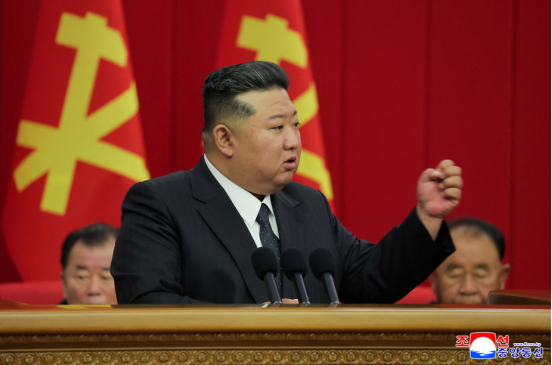
A cornerstone of Kim Jong Un’s strategy for legitimacy has been his deliberate and striking imitation of his grandfather, Kim Il Sung, the revered founder of North Korea. This is not mere coincidence but a calculated political tactic. By adopting Kim Il Sung’s hairstyle, clothing, public mannerisms, and even his style of public speaking, Kim Jong Un seeks to tap into the deep-seated nostalgia and reverence for the nation’s founder. This visual and political association helps to bridge the legitimacy gap caused by his youth and inexperience, positioning him as the rightful heir to the “Paektu bloodline” and the revolutionary spirit of his grandfather, thereby reinforcing his god-like status among the populace.
The Game of Thrones in Pyongyang: Purges and Aides
To cement his rule, Kim Jong Un initiated a series of ruthless purges targeting high-ranking officials, including his own uncle, Jang Song-thaek, who was executed in 2013 for allegedly plotting to overthrow the regime. This brutal act sent a clear message that no one was beyond his reach and that absolute loyalty was demanded. Throughout his rule, the fortunes of his top aides have risen and fallen dramatically. Figures like Choe Ryong-hae and Hwang Pyong-so have experienced cycles of promotion, demotion, and rehabilitation. This constant shuffling of his inner circle serves a dual purpose: it prevents any single individual from accumulating enough power to challenge his authority and keeps the elite in a constant state of competition for his favor, ensuring their dependence on him.

The Dual Logic of North Korea’s Enduring Isolation
North Korea’s status as the “Hermit Kingdom” is not an accident but a carefully maintained strategy for regime survival. This isolation is governed by a dual logic: the external factors that make it difficult to open up (“can’t”) and the internal imperatives that make it undesirable to do so (“don’t want”). Understanding both sides of this coin is crucial to grasping DPRK’s foreign and domestic policy.
The “Can’t Open” Dilemma: External Pressures
From an external perspective, significant barriers prevent North Korea from fully integrating with the global community. The primary obstacle is the comprehensive web of international sanctions led by the United States and the United Nations. These sanctions, imposed in response to the country’s nuclear and missile programs, severely restrict its ability to trade, access financial markets, and import necessary technology. The persistent military and political hostility from the U.S. and its allies in the region further reinforces the perception within Pyongyang that opening up would make the regime vulnerable to external interference and a “hostile takeover,” akin to the fate of regimes in Iraq and Libya.
The “Don’t Want to Open” Ideology: Preserving the Regime
Internally, the regime has a strong vested interest in maintaining its isolation. The state ideology of Juche, or self-reliance, provides the philosophical foundation for this closure. Opening the country to foreign trade, investment, and culture would introduce outside information and ideas that could directly challenge the state’s narrative and control over its population. The free flow of information would expose citizens to the economic prosperity of South Korea and the West, potentially eroding the legitimacy of the Kim dynasty and sparking social unrest. Therefore, isolation is a critical tool for social control, ensuring the political stability and longevity of the regime itself.

The Nuclear Ambition: A Nation’s Ultimate Insurance Policy
North Korea’s nuclear weapons program is arguably the most defining feature of its national strategy and its primary source of international leverage and concern. For the Kim regime, nuclear weapons are not a bargaining chip to be traded away but the ultimate guarantee of its sovereignty and survival in a hostile world. This conviction has driven a decades-long pursuit that has accelerated dramatically under Kim Jong Un.
Historical Trajectory and Strategic Rationale
The DPRK’s nuclear ambitions date back to the Cold War, but it was the collapse of the Soviet Union and the observation of U.S. military interventions against non-nuclear states that solidified its resolve. The leadership in Pyongyang views nuclear weapons through several strategic lenses:
- Deterrence: The primary goal is to deter a military attack from the United States and its allies. The regime believes that a credible nuclear arsenal is the only absolute guarantee against a forced regime change.
- International Prestige: Possessing nuclear weapons elevates North Korea’s status on the global stage, forcing major powers like the United States to engage with it directly.
- Domestic Legitimacy: The nuclear program is portrayed internally as a monumental achievement of the Juche ideology and a source of national pride, bolstering the regime’s standing with its own people.
The “Byungjin” Policy: Guns and Butter
Under Kim Jong Un, North Korea formally adopted the Byungjin policy, which calls for the simultaneous development of the national economy and nuclear weapons. This doctrine signals that the nuclear program is not considered a temporary measure but a permanent and parallel track to economic progress. While it places an immense strain on the country’s limited resources, the regime sees the security provided by nuclear weapons as a prerequisite for any stable economic development. This policy underscores the non-negotiable nature of its nuclear status, presenting a significant challenge for international diplomacy and denuclearization efforts.

Engineering an Economy on Scraps and Strategy
Crippled by sanctions and ideological rigidity, North Korea’s economy is a unique hybrid of state control, illicit activities, and pragmatic adaptation. To achieve industrial development and sustain itself, the regime has relied on unconventional strategies, most notably by leveraging obsolete technology and equipment from its primary economic partner, China.
The China Connection: Revitalizing Industry with Obsolete Equipment
As China undergoes rapid industrial modernization, it phases out vast quantities of older, but still functional, manufacturing equipment. North Korea has become a primary destination for this second-hand machinery. By importing these obsolete production lines at a low cost, the DPRK can achieve several objectives:
- Cost-Effective Industrialization: It allows North Korea to build or upgrade its industrial base—in sectors like steel, cement, and textiles—without the massive capital investment required for state-of-the-art technology.
- Circumventing Sanctions: Trade in older, less sophisticated equipment is often harder to track and less likely to fall under the strictest categories of international sanctions, which typically target dual-use and high-tech goods.
- Alignment with Juche: This strategy aligns with the ideology of self-reliance, as it provides the means for domestic production, even if the technology is dated.
This approach allows for a degree of industrial progress and helps maintain employment in key state-owned enterprises, contributing to the regime’s stability. However, it also locks the country into a cycle of technological backwardness and inefficiency, limiting its long-term economic potential.
The State of North Korea’s Modern Industry
North Korea’s industry remains heavily focused on military production and heavy industries that support it. While the infusion of Chinese equipment has helped, the overall economy suffers from chronic energy shortages, a lack of raw materials, and dilapidated infrastructure. The “Byungjin” policy, by diverting scarce resources to the defense sector, further exacerbates these challenges for the civilian economy. Despite these limitations, the regime has managed to keep its core industries operational, demonstrating a remarkable, if inefficient, resilience in the face of overwhelming economic pressure.

Conclusion: The Complex Calculus of a Modern Dynasty
The North Korea of Kim Jong Un is a nation governed by a complex and often contradictory set of principles. It is a regime that seeks economic development while championing an ideology of isolation that stifles it. It builds its legitimacy on the legacy of a bygone era while navigating the hyper-modern challenges of the 21st century. Kim Jong Un has proven to be a shrewd and ruthless leader, successfully consolidating his power, advancing his nuclear arsenal, and ensuring the survival of his dynasty against immense international pressure. His rule is a masterclass in authoritarian stability, built upon the pillars of ideological purity, brutal political control, military-first philosophy, and pragmatic economic survival. Understanding the DPRK requires moving beyond caricature and appreciating the cold, calculated logic that underpins its every move on the world stage.
Frequently Asked Questions (FAQ)
- Why does Kim Jong Un so closely imitate his grandfather, Kim Il Sung?
- Kim Jong Un imitates his grandfather as a calculated political strategy to bolster his legitimacy. By adopting Kim Il Sung’s appearance and mannerisms, he taps into the widespread reverence for the nation’s founder. This helps him overcome perceived weaknesses, such as his youth and inexperience when he first took power, and reinforces his claim as the rightful successor to the “Paektu bloodline,” solidifying his authority.
- What is the “Byungjin” policy?
- The Byungjin policy is North Korea’s official state strategy of simultaneously pursuing two parallel goals: the development of its nuclear weapons program and the growth of its national economy. The regime believes that a strong nuclear deterrent provides the security necessary for stable economic activity. This policy highlights the non-negotiable status of its nuclear arsenal, viewing it as a prerequisite for, rather than a hindrance to, national prosperity.
- Are international sanctions effective against North Korea?
- The effectiveness of sanctions is a complex issue. On one hand, they have successfully crippled North Korea’s formal economy, restricted its access to global financial systems, and slowed the import of advanced technology for its weapons programs. On the other hand, they have not achieved their primary political goal of forcing the regime to abandon its nuclear ambitions. North Korea has proven adept at circumventing sanctions through illicit trade, cybercrime, and economic partnerships with sympathetic actors, ensuring the regime’s survival.
- How did Kim Jong Un become the successor over his older brothers?
- While the exact reasons remain within the secretive confines of the regime, several factors likely contributed. His eldest brother, Kim Jong Nam, fell out of favor after being caught trying to enter Japan on a fake passport in 2001 and lived in exile. His other older brother, Kim Jong Chul, was reportedly deemed too “effeminate” and lacking in leadership qualities by his father, Kim Jong Il. Kim Jong Un, despite his youth, was seen as possessing the ambition, ruthlessness, and political acumen necessary to lead the country, qualities he later demonstrated in his swift consolidation of power.
- What is the primary motivation for North Korea’s nuclear program?
- The primary motivation is regime survival through deterrence. The North Korean leadership observed the fates of non-nuclear leaders like Saddam Hussein in Iraq and Muammar Gaddafi in Libya, who were overthrown after clashing with the United States. They concluded that a credible nuclear arsenal is the only absolute guarantee against a U.S.-led military intervention or forced regime change. All other benefits, such as international prestige and domestic legitimacy, are secondary to this core security imperative.