A Guide to Unforgettable Travels: From Quebec’s Historic Charm to Iceland’s Northern Lights
For the modern traveler, the world offers a dazzling spectrum of experiences, from the rich tapestry of ancient cities to the raw, untamed beauty of natural wonders. This guide delves into two such profoundly different yet equally captivating destinations: Québec, a bastion of French culture in the heart of North America, and Iceland, a land of fire and ice where the night sky dances with ethereal light. We will explore the cobblestone streets of Old Québec, savor its unique culinary delights, and then journey across the Atlantic to chase the elusive Aurora Borealis. This is your ultimate resource for planning, understanding, and experiencing two of the planet’s most unforgettable adventures.
Quebec: A Slice of European Charm in North America
Nestled along the Saint Lawrence River, Québec City stands as a living museum and the heart of French-speaking Canada. Its fortified colonial core, a UNESCO World Heritage site, transports visitors to another era. The city offers a unique blend of European ambiance, North American energy, and a rich history that has been meticulously preserved. A visit here is not just a trip, but an immersion into a culture that is both historic and vibrantly alive.
Exploring the Historic Heart: Old Québec (Vieux-Québec)
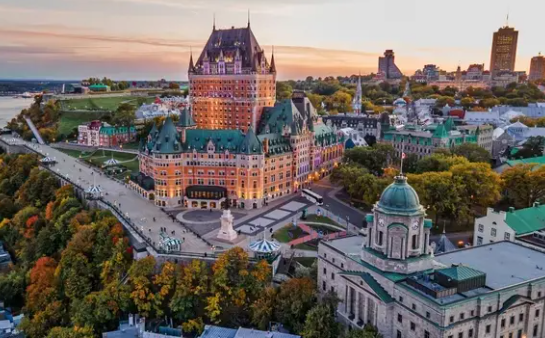
The soul of the city resides within the walls of Old Québec, the only fortified city north of Mexico. It’s divided into two distinct areas: the Upper Town (Haute-Ville) and the Lower Town (Basse-Ville). Dominating the skyline is the iconic Château Frontenac, a grand hotel that looks more like a fairytale castle. A stroll along the Dufferin Terrace, the boardwalk in front of the hotel, offers breathtaking views of the river and the surrounding landscape. From there, you can descend the “Breakneck Stairs” (or take the funicular) into the Quartier Petit Champlain in the Lower Town. This area is a labyrinth of narrow cobblestone streets, lined with artisan boutiques, charming bistros, and 17th-century stone houses. It is here that you truly feel the city’s four centuries of history.
Natural Wonders Just Outside the City
While the city itself is a major draw, breathtaking natural beauty is just a short drive away. The most famous is Montmorency Falls (Parc de la Chute-Montmorency), a spectacular waterfall that is actually 30 meters (98 feet) higher than Niagara Falls. You can experience its power from multiple viewpoints, including a suspension bridge that crosses the top of the falls, a cable car ride, or by climbing the panoramic staircase. Another essential outdoor space is the Plains of Abraham, a vast urban park that was the site of the famous 1759 battle between the French and British. Today, it serves as the city’s “lungs,” offering a peaceful escape for walking, picnicking, and, in winter, cross-country skiing.
Immersing Yourself in French-Canadian Culture and Cuisine
Québec’s culture is a proud and distinct entity. The French language is not just spoken; it’s the lifeblood of the province. Engaging with locals, even with a simple “Bonjour,” is greatly appreciated. This cultural pride extends to its cuisine, which is hearty, rustic, and delicious. You cannot leave without trying these staples:
- Poutine: The world-famous dish of French fries and cheese curds smothered in a rich brown gravy.
- Tourtière: A traditional French-Canadian meat pie, typically filled with minced pork, veal, or beef and spices.
- Tire d’érable (Maple Taffy): Hot maple syrup poured onto fresh snow and rolled onto a stick, a classic winter treat.
–
Exploring the city’s bakeries for fresh croissants and pains au chocolat or settling into a cozy bistro for a bowl of French onion soup is an essential part of the Québec experience.

Iceland: Chasing the Ethereal Northern Lights
Iceland is a land of dramatic contrasts, where volcanic fire meets glacial ice and rugged landscapes stretch to the horizon. But for many, its ultimate allure is the celestial ballet known as the Aurora Borealis, or the Northern Lights. Witnessing this natural phenomenon is a humbling and awe-inspiring experience that tops countless travel bucket lists. Success, however, requires planning, patience, and a bit of luck.
Understanding the Aurora Borealis: Science and Myth
The Northern Lights are not magic, but the science behind them is magical in its own right. They are caused by electronically charged particles from the sun (solar wind) colliding with gaseous particles in the Earth’s atmosphere. These collisions emit light of varying colors, most commonly green, but sometimes pink, red, yellow, and blue. Ancient cultures, including the Norse, had their own explanations. Some believed the lights were the reflections off the shields of the Valkyries, the mythical female figures who chose who would live and die in battle.
Prime Locations for Aurora Hunting in Iceland
The key to seeing the aurora is to escape light pollution. While you can occasionally spot them from Reykjavík, your chances increase exponentially by heading into the countryside. Some of the most renowned spots include:
- Thingvellir National Park: A UNESCO World Heritage site, its vast, dark lava fields provide a dramatic foreground for the dancing lights.
- Jökulsárlón Glacier Lagoon: Located on the south coast, the sight of the aurora reflecting on the icy water and floating icebergs is truly otherworldly.
- The Westfjords: This remote and sparsely populated peninsula offers some of the darkest skies in the country, making it a prime location for serious aurora chasers.
Essential Tips for a Successful Northern Lights Expedition
Maximizing your chances of seeing the lights involves more than just picking a spot. You must monitor the conditions closely. The aurora forecast, measured by the Kp-index (from 0 to 9), predicts the geomagnetic activity; a Kp of 3 or higher is generally considered good for viewing. The best time to visit is during the winter months, from late September to early April, when the nights are longest and darkest. Always dress in multiple warm, insulated, and waterproof layers, as you may be standing outside in freezing temperatures for hours waiting for the show to begin.

Planning Your Epic Adventure: Logistics and Itineraries
Embarking on a journey that includes both the historic streets of Québec and the wild landscapes of Iceland requires careful planning. These destinations offer vastly different experiences and demand different approaches to travel, packing, and scheduling. A well-thought-out plan will ensure you can fully appreciate the unique character of each location without logistical stress.
Best Travel Seasons for Each Destination
Timing is critical as the ideal seasons for these two destinations are nearly opposite. Québec City is magnificent in the summer (June-August), with warm weather perfect for strolling and numerous outdoor festivals, like the Festival d’été de Québec. However, winter (December-February) offers its own magic with the world-famous Québec Winter Carnival and a storybook snowy landscape. In contrast, the prime time for Iceland is dictated by your primary goal. For chasing the Northern Lights, you must visit between September and April when the nights are long and dark. For hiking, exploring the highlands, and seeing the midnight sun, the summer months (June-August) are ideal.
Transportation and Accommodation Strategies
Navigating these destinations is also a tale of two different approaches. Old Québec is eminently walkable; its compact, pedestrian-friendly streets are best explored on foot. For longer distances, the city has an efficient public transit system. For Iceland, renting a car is almost essential for the freedom to chase the aurora and explore remote areas. In winter, a 4×4 vehicle is highly recommended for handling icy and unpredictable road conditions. Accommodation in Québec ranges from the grand Château Frontenac to charming boutique hotels and B&Bs. In Iceland, options include hotels in Reykjavík, cozy guesthouses in the countryside, and farm stays that offer a more rustic experience.
Packing Essentials for Two Distinct Climates
Packing for a dual-destination trip like this requires versatility. You need to be prepared for both urban exploration and extreme cold-weather expeditions.
| For Québec | For Iceland (Winter) |
|---|---|
| Comfortable walking shoes | Insulated, waterproof hiking boots |
| Light layers (jacket, sweater) | Thermal base layers (wool or synthetic) |
| Smart-casual outfits for dining | Waterproof and windproof outer shell (jacket and pants) |
| Sunscreen and a hat (summer) | Warm hat, gloves, scarf, and wool socks |
| Reusable water bottle | Camera, tripod, and extra batteries (cold drains them faster) |

Comparing the Experiences: Urban Exploration vs. Natural Spectacle
At their core, Québec and Iceland offer fundamentally different types of travel fulfillment. One is a deep dive into human history, culture, and creation, while the other is an encounter with the raw, powerful, and humbling forces of nature. Understanding this contrast is key to appreciating what makes each destination so special.
The Core Atmosphere: Historic Ambiance vs. Wild Serenity
The atmosphere in Old Québec is one of curated history and romantic charm. The sounds are of church bells, horse-drawn carriages on cobblestones, and the chatter of French in sidewalk cafes. It’s an experience of human scale, where every corner turned reveals another piece of a 400-year-old story. Iceland, particularly during an aurora hunt, offers the opposite: profound silence and immense scale. The atmosphere is one of wild serenity and solitude. Standing under a sky ablaze with green light, with nothing but the sound of the wind and the crunch of snow underfoot, is an experience that connects you not to history, but to the cosmos itself.
The Primary Activities: Cultural Immersion vs. Nature’s Grandeur
Your days in Québec will be filled with activities centered on cultural immersion. You might spend the morning in a museum like the Musée national des beaux-arts du Québec, the afternoon shopping for local crafts, and the evening enjoying a multi-course French-Canadian meal. It is an exploration of art, food, and architecture. In Iceland, the primary activities are driven by nature’s grandeur. Your days are spent hiking on glaciers, exploring ice caves, visiting black sand beaches, and marveling at powerful waterfalls. The nights, of course, are dedicated to the patient vigil of watching the sky, an activity that is both a hunt and a meditation.
Frequently Asked Questions (FAQ)
- What is the absolute best time to see the Northern Lights in Iceland?
- The optimal period is from late September to late March. For the best chances, aim for the months with the longest, darkest nights, such as December, January, and February. It’s also crucial to travel during a new moon phase to ensure the sky is as dark as possible.
- Is it necessary to speak French to enjoy a trip to Quebec City?
- No, it is not necessary. While French is the official language, Québec City is a major tourist destination, and most people in the service industry (hotels, restaurants, shops) speak English. However, learning a few basic French phrases like “Bonjour” (Hello), “Merci” (Thank you), and “Au revoir” (Goodbye) is a polite gesture that is always appreciated by locals.
- What kind of camera equipment do I need for aurora photography?
- To capture the Northern Lights effectively, you need a camera with manual settings (DSLR or mirrorless), a wide-angle lens with a fast aperture (e.g., f/2.8 or lower), and a sturdy tripod to keep the camera stable during long exposures. Don’t forget extra batteries, as the cold weather can drain them very quickly.
- Can I visit both Quebec and Iceland in a single trip?
- Yes, it’s possible, especially with airlines that offer stopovers in Iceland on transatlantic flights between North America and Europe. A common strategy is to fly from a North American city to Iceland, spend a few days, and then continue to Europe, or vice-versa. This allows you to experience two vastly different destinations efficiently.
- What is the one can’t-miss dish to try in Quebec?
- While poutine is the most famous, many locals would argue that a truly authentic experience is trying a classic tourtière. This savory meat pie is a staple of traditional Québecois holiday meals and family gatherings. Finding a restaurant that serves a homemade-style tourtière provides a delicious taste of the region’s culinary heritage.