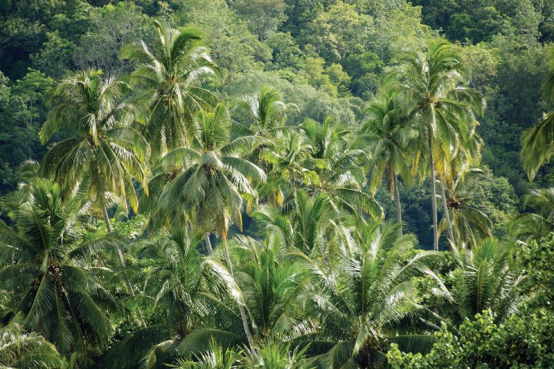
Do Malaysians really live in trees? Debunking a long-standing stereotype
“Do all Malaysians live in trees?”
When you hear this question, you might think the other person is joking. But in fact, such stereotypes are still circulating on the Internet, and are even regarded as “facts” by some people who don’t understand Southeast Asian culture. This is not only ridiculous, but also exposes extreme ignorance of a country’s social structure and historical culture.
So, where does this saying come from? Why does it persist for so long? What is the real living situation in Malaysia? This article will take you to dismantle these misunderstandings, return to the facts themselves, and explore why we need to be wary of this kind of “cultural curiosity” thinking.
Modern Malaysia: Urbanization rate reaches 75%
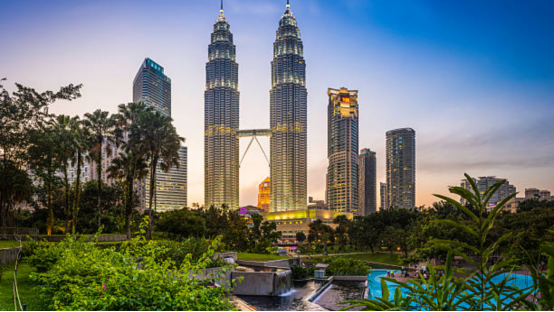
First, let’s put an end to the myth of the “tree tribe” with data. According to data from the World Bank and the Malaysian Statistics Department, as of 2020, Malaysia’s urbanization rate has reached about 75% , which means that three-quarters of the population lives in cities or urbanized areas.
This set of data puts Malaysia at the forefront of urbanization in Southeast Asia, far higher than the global average. In other words, the daily lifestyle of the vast majority of Malaysians is not fundamentally different from that of urban residents in New York, London or Sydney. They live in high-rise apartments, terrace houses, and modern country houses, rather than dwellings made of tree branches.
The process of urbanization also means perfect infrastructure: modern roads, subway systems, shopping malls, digital payment platforms and high-speed networks cover almost all large and medium-sized cities. Malaysia is even one of the countries with the highest mobile Internet penetration rate in Southeast Asia.
The gap between the reality and the “Tree House Tribe” is huge.
Where do stereotypes come from? Colonial narratives and cultural misreading
To understand this absurd misunderstanding, we need to go back to the colonial era. In the 18th and 19th centuries, European colonists often described Southeast Asia with a strong tendency to “seek novelty”. Travel diaries, illustrations and expedition reports at that time often deliberately highlighted “primitive” and “exotic” elements to satisfy the Western public’s curiosity about the “uncivilized world”.
In these narratives, stilt houses are overly romanticized and even misinterpreted as “living in trees”. In fact, stilt houses are a kind of intelligent architecture in the tropical climate of Southeast Asia. They are usually built with wood or bamboo, with the bottom raised to avoid floods, moisture and snakes and insects. This architectural style is not only found in Malaysia, but also widely distributed in coastal or river areas in Thailand, Vietnam, Cambodia and other places.
The problem is that Western colonial discourse labels these traditional buildings and solidifies them in the perception of the entire country, forming a “primitive tribe” stereotype.
This misunderstanding can still be amplified in modern times, one of the reasons is tourism marketing. For example, the “tree house resorts” in Sabah or Sarawak have been made into popular attractions, and social platforms are full of “jungle adventure” photos. This deliberately created “primitive feeling” satisfies tourists’ experience, but it reinforces the outside world’s misunderstanding that “Malaysia = life in trees”.
Stilt House ≠ Tree House: The True Appearance of Aboriginal Architecture
It needs to be clarified that there are indeed some Orang Asli or indigenous groups in East Malaysia who retain traditional architecture, but even these houses are not simple huts “hanging on trees”, but stilt houses with stable structures and reasonable functions .
The design logic of the stilt house is very scientific:
Moisture and flood prevention : Southeast Asia has a lot of rain, and elevated houses can avoid flooding.
Insect and snake proof : The overhead structure reduces contact with the ground and prevents poisonous snakes and insects from crawling in.
Ventilation and cooling : In tropical climates, air circulation is necessary, and stilt houses are more comfortable than closed brick houses.
As modernization progresses, most aboriginal communities have moved into brick houses or permanent housing projects provided by the government. The traditional stilt houses are preserved more for cultural protection and tourism experience rather than daily necessity.
Contemporary Malaysian Housing: From Skyscrapers to “Terrace House Culture”
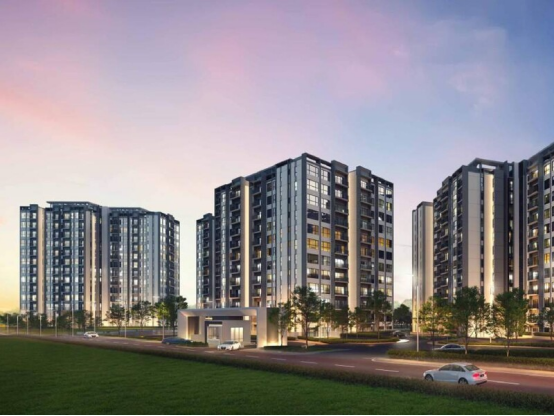
The main types of modern houses in Malaysia include:
High-rise apartment (Condominium) : Standard in cities such as Kuala Lumpur and Penang, with complete supporting facilities.
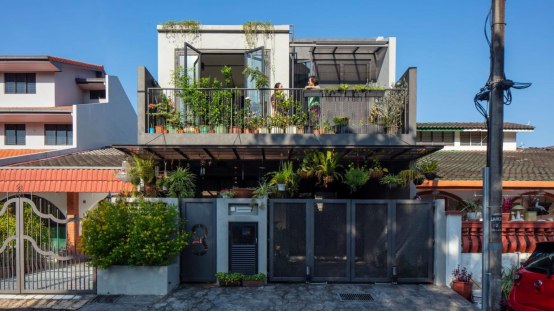
Terrace House : A residential form left over from the British colonial period, similar to the townhouses in the UK, and is very popular among middle-class families.
Bungalow : A symbol of luxury housing choice for high-income groups.
Affordable housing (Rumah Mampu Milik) built by the government : aimed at low-income groups to improve housing conditions.
Compared with global trends, Malaysia’s living style is closer to developed countries than “jungle tree houses”. In fact, Kuala Lumpur’s skyline is enough to break all “primitive myths”. The towering skyscrapers and shopping malls here make it impossible to associate “living in trees” with it.
Interesting facts about living under trees during durian season
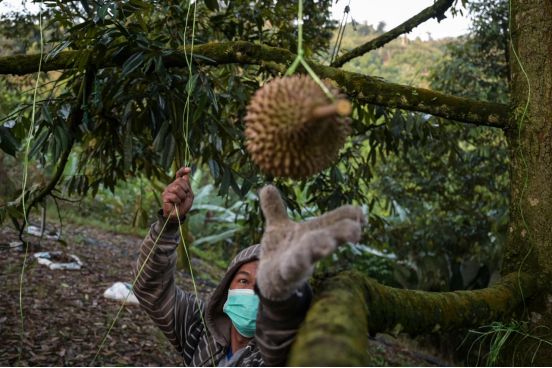
Since we want to restore the facts, we can also mention a slightly humorous scene: During the durian harvest season in Malaysia, some people will choose to set up tents or temporary sheds in the orchard to pick up the fallen durians as soon as possible. But this is completely different from “living in the tree”. It is more like a seasonal labor or leisure activity, similar to the outdoor camping experience on American farms during the picking season.
Why must this misunderstanding be corrected?
You may ask: “Isn’t this just a small misunderstanding? Is it worth making a fuss?”
The answer is: it is. Because hidden behind this misunderstanding is a kind of cultural prejudice, which may even evolve into stereotyped discrimination against an entire country or ethnic group.
When we use labels like “living in trees” to describe a modern country, we not only ignore the true face of local society, but also inadvertently reinforce the colonial narrative logic of “civilization vs. barbarism.” This narrative influence still subtly appears in film and television works, tourism advertisements and even international news reports.
What other similar stereotypes exist around the world?
Do all Africans live in thatched huts?
In fact, the big cities in countries such as Nigeria and Kenya are much more modern than many Westerners imagine.
The Arab world is full of deserts?
In fact, the urban construction of Dubai and Doha is comparable to science fiction movies.
Do Australians often see kangaroos jumping on the streets?
Kangaroos are common in remote areas, but Sydney and Melbourne are not “wildlife parks”.
The existence of these misconceptions reminds us that we need to seek more evidence and think more when acquiring information.
Conclusion: Why can’t the “tree stereotype” continue to exist?
Because this is not only a matter of fact, but also a matter of cognition. It is about how we understand cultural diversity in the era of globalization and how to avoid distorting other countries’ cultures into “exotic fodder.”
Next time someone asks you, “Do Malaysians live in trees?” you can tell them,
“No, they live in high-rise apartments, modern homes, and are probably more urban than you think.”
Here’s the question: How do you think we can break down these cross-cultural misunderstandings in the age of social media ? Feel free to leave your thoughts in the comments section.