Ultimate Guide to Borobudur: Indonesia’s Buddhist Wonder
The Historical Significance of Borobudur Temple
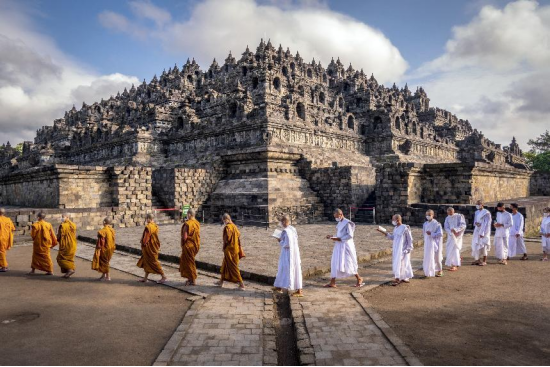
Borobudur stands as the world’s largest Buddhist temple and one of the greatest archaeological sites in Southeast Asia. Located in the Kedu Valley of Central Java, just a short journey from Yogyakarta, this magnificent structure is a testament to the spiritual devotion and engineering prowess of ancient Indonesia. To truly appreciate Borobudur, one must dive into the rich historical context that surrounds its creation, abandonment, and eventual resurrection.
The Sailendra Dynasty and the Era of Construction
Built during the 8th and 9th centuries under the reign of the Sailendra Dynasty, Borobudur was constructed over an estimated 75 years. The Sailendras were ardent followers of Mahayana Buddhism, and they envisioned a monument that would serve both as a shrine to the Lord Buddha and a place for Buddhist pilgrimage. Unlike traditional temples built on flat ground, Borobudur was ingeniously constructed over a natural hill, utilizing over two million blocks of andesite volcanic stone fitted together without a single drop of mortar.
Abandonment and the Jungle’s Embrace
Despite its grandeur, Borobudur was mysteriously abandoned around the 14th century. Historians attribute this decline to the shifting of Javanese power to East Java, coupled with a series of devastating volcanic eruptions from nearby Mount Merapi. For centuries, the temple lay hidden beneath layers of volcanic ash and dense jungle growth, existing only in local folklore and myths. It wasn’t until 1814, during the British administration of Java, that Sir Thomas Stamford Raffles was informed of a massive ruined monument deep in the jungle, leading to its rediscovery and eventual excavation.

Architectural Marvel: The Three Realms of Buddhist Cosmology
What makes Borobudur a true wonder of the ancient world is its intricate architectural design. The temple is built in the shape of a massive, three-dimensional mandala—a sacred geometric diagram representing the universe in Buddhist theology. The structure guides pilgrims through a physical and spiritual ascent, representing the soul’s journey toward enlightenment.
In-Depth Analysis: Kamadhatu, Rupadhatu, and Arupadhatu
The temple’s vertical structure is strictly divided into three distinct zones, each symbolizing a phase in Buddhist cosmology:
- Kamadhatu (The Realm of Desires):
- Rupadhatu (The Realm of Forms):
- Arupadhatu (The Realm of Formlessness):
The hidden base of the temple represents the realm of human desires, where mortals are bound by their lusts and earthly attachments. The original reliefs here depict the law of karma, illustrating the consequences of both good and evil deeds.
The five square terraces above the base represent the transitional sphere. Here, humans have conquered their worldly desires but are still bound by name and form. This section features over 2,500 incredibly detailed bas-relief panels that narrate the life of Buddha (Lalitavistara) and various Jataka tales.
The three uppermost circular platforms represent the highest spiritual realm, completely free from worldly attachments and physical forms. Unlike the lower levels, there are no reliefs here. Instead, the area is adorned with 72 bell-shaped stupas, each housing a statue of the Buddha, culminating in one massive, empty central stupa symbolizing Nirvana.

Essential Visitor Guide: How to Experience Borobudur
Visiting Borobudur today requires strategic planning, especially given recent conservation efforts implemented by the Indonesian government to protect the structural integrity of this UNESCO World Heritage site. Understanding the operational details of your visit is crucial for a seamless experience.
Navigating the New Quota and Ticketing System
To prevent wear and tear on the ancient stones, authorities have introduced a strict visitor quota system. Only 1,200 visitors are permitted to climb up to the temple structure per day. Tickets are divided into two primary categories:
- Temple Grounds Ticket:
- Temple Structure Ticket:
Allows access to the park surrounding the temple, offering excellent ground-level views, but prohibits climbing the actual monument.
Grants permission to ascend the temple. This ticket includes a mandatory guided tour and a pair of special bamboo sandals known as “Upanat,” designed specifically to prevent friction and erosion on the stone steps.
Comparative Analysis: Borobudur vs. Prambanan
Many travelers to Yogyakarta debate whether to visit Borobudur, Prambanan, or both. Understanding the fundamental differences between these two iconic sites can help enrich your cultural itinerary.
| Feature | Borobudur Temple | Prambanan Temple |
|---|---|---|
| Religious Affiliation | Mahayana Buddhism | Hinduism (Dedicated to Shiva) |
| Architectural Style | Massive, single stupa/mandala structure | Tall, slender, multi-tower complex |
| Primary Shape | Broad and horizontal (squat) | Vertical and towering (up to 47 meters) |
| Core Symbolism | The path to Nirvana and enlightenment | The Trimurti (Creator, Preserver, Destroyer) |
| Best Time to Visit | Sunrise (for mystical, foggy valley views) | Sunset (for dramatic silhouettes) |
Pro Tips and Technical Checklist for Visitors
To maximize your experience at this sacred site, preparation is key. Here is an expert-curated checklist and set of pro tips for navigating Borobudur like a seasoned traveler.
The Ultimate Packing and Preparation Checklist
- Advance Booking:
- Modest Attire:
- Sun Protection:
- Hydration Strategy:
Always book your “Temple Structure” tickets online weeks in advance, as the 1,200 daily quota sells out rapidly, especially during peak tourist seasons.
As an active spiritual site, modest dress is required. Shoulders and knees must be covered. A sarong is often provided, but bringing your own lightweight clothing is highly recommended.
The upper levels (Arupadhatu) offer zero shade. Bring high-SPF sunscreen, a wide-brimmed hat, and polarized sunglasses.
The climb is steep and the Javanese humidity is intense. Carry a reusable water bottle; however, be mindful that drinking on the monument itself may be restricted to preserve the stone.
Frequently Asked Questions (FAQ)
- What is the best time of day to visit Borobudur?
- The early morning is universally considered the best time to visit. Arriving right at opening time allows you to beat the intense midday heat and avoid the largest tourist crowds. The morning mist rolling over the Kedu Valley provides a magical, ethereal atmosphere.
- Can I still do the famous Borobudur Sunrise Tour?
- The traditional sunrise tour from within the temple via the Manohara Hotel has undergone changes due to conservation rules. While you may not be able to sit on the top stupas in the dark as in the past, you can still book early access tickets or view the sunrise from the nearby Punthuk Setumbu hill before entering the temple grounds.
- Is Borobudur wheelchair accessible?
- The surrounding park and the base level of the temple are accessible to wheelchair users, offering excellent views of the structure. However, climbing the ancient, steep, and uneven stone steps to the upper terraces is unfortunately not feasible for those with mobility impairments.
- Do I need a guide to explore the temple?
- If you purchase the ticket to climb the temple structure, a local guide is included and mandatory. This is highly beneficial, as the guides provide invaluable context to the thousands of relief panels that would otherwise be difficult to interpret on your own.
- What are the Upanat sandals, and do I get to keep them?
- Upanat sandals are specially crafted footwear made from woven pandanus leaves and rubber soles, designed to prevent the erosion of the temple’s ancient stones. Yes, they are included in the price of the structure climbing ticket, and visitors are encouraged to take them home as a unique, eco-friendly souvenir.