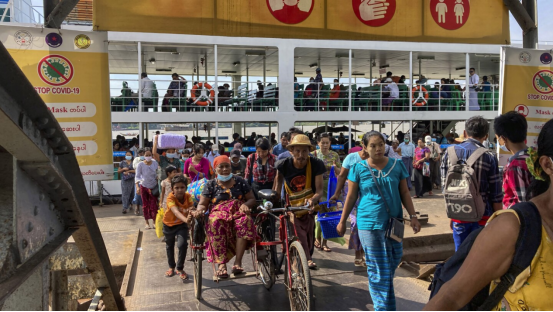
Myanmar in Crisis: War, Economic Decay, and Political Deadlock
The Structural Roots of Myanmar’s Multi-Dimensional Crisis
The current situation in Myanmar is not merely a product of recent political upheavals but the result of decades of institutional fragility colliding with active conflict. The nation is trapped in a tripartite crisis involving the erosion of state legitimacy, the collapse of macroeconomic stability, and the catastrophic impact of climate-induced natural disasters.
The Erosion of Institutional Legitimacy
The military’s attempts to consolidate power have led to a profound governance vacuum. By dismantling democratic institutions, the ruling junta has severed the lines of communication between the state and the citizenry, creating a landscape where civil disobedience and armed resistance have become the only viable modes of political expression for large segments of the population.

Economic Destabilization and the Path to Hyperinflation
Myanmar’s economy faces an existential threat characterized by the depreciation of the Kyat, supply chain disruptions, and a significant decline in foreign direct investment. The combination of international sanctions and domestic instability has forced the economy into a state of survival.
Macroeconomic Indicators of Collapse
- Currency Volatility: The rapid devaluation of the local currency has triggered rampant inflation, specifically affecting the cost of imported fuel, medicine, and basic food staples.
- Supply Chain Fragmentation: Ongoing conflict has rendered key logistical corridors unsafe, preventing the movement of goods from rural agricultural hubs to urban markets.
- Foreign Investment Flight: Global corporations have exited the market, citing human rights concerns and the inability to guarantee operational safety.

The Civil War and the Political Deadlock
The armed conflict in Myanmar has evolved from localized skirmishes into a nationwide civil war. The military, despite its traditional reliance on superior firepower, finds itself stretched thin across multiple fronts, facing both ethnic armed organizations (EAOs) and newly formed People’s Defense Forces (PDFs).
The Dynamics of Military Power vs. Democratic Resistance
The stalemate is defined by a lack of political willingness to engage in inclusive dialogue. The military’s insistence on a centralized, top-down governance model is fundamentally incompatible with the aspirations of the diverse ethnic and democratic groups seeking a federalist future.

Social Dilemmas and Humanitarian Consequences
Beyond the battlefield, the civilian population bears the brunt of the instability. The convergence of conflict and natural disasters—such as flooding and extreme weather events—has displaced millions, creating a humanitarian crisis that the current administration is ill-equipped to manage.
Critical Social Impacts
| Factor | Impact on Population |
|---|---|
| Healthcare | Severe shortages of essential medical supplies and personnel. |
| Education | Widespread closure of schools and universities, leading to a lost generation. |
| Food Security | Agricultural failure coupled with rising costs threatens widespread famine. |
Frequently Asked Questions (FAQ)
- Q1: What is the primary cause of Myanmar’s economic crisis?
- The crisis is driven by the synergistic effect of political instability, international sanctions, and the disruption of internal trade networks due to ongoing civil conflict.
- Q2: How has the civil war affected daily life for citizens?
- Citizens face extreme uncertainty, including the loss of livelihoods, lack of access to basic public services, and the constant threat of violence, leading to massive internal displacement.
- Q3: Is there a path toward diplomatic resolution in Myanmar?
- Current diplomatic efforts remain deadlocked, as the military’s demand for control contradicts the democratic aspirations of the opposition, making a swift political compromise highly unlikely.
- Q4: Why are natural disasters exacerbating the political situation?
- Natural disasters place an additional strain on the already shattered state infrastructure, revealing the military’s inability to provide disaster relief, which further delegitimizes their authority in the eyes of the public.